

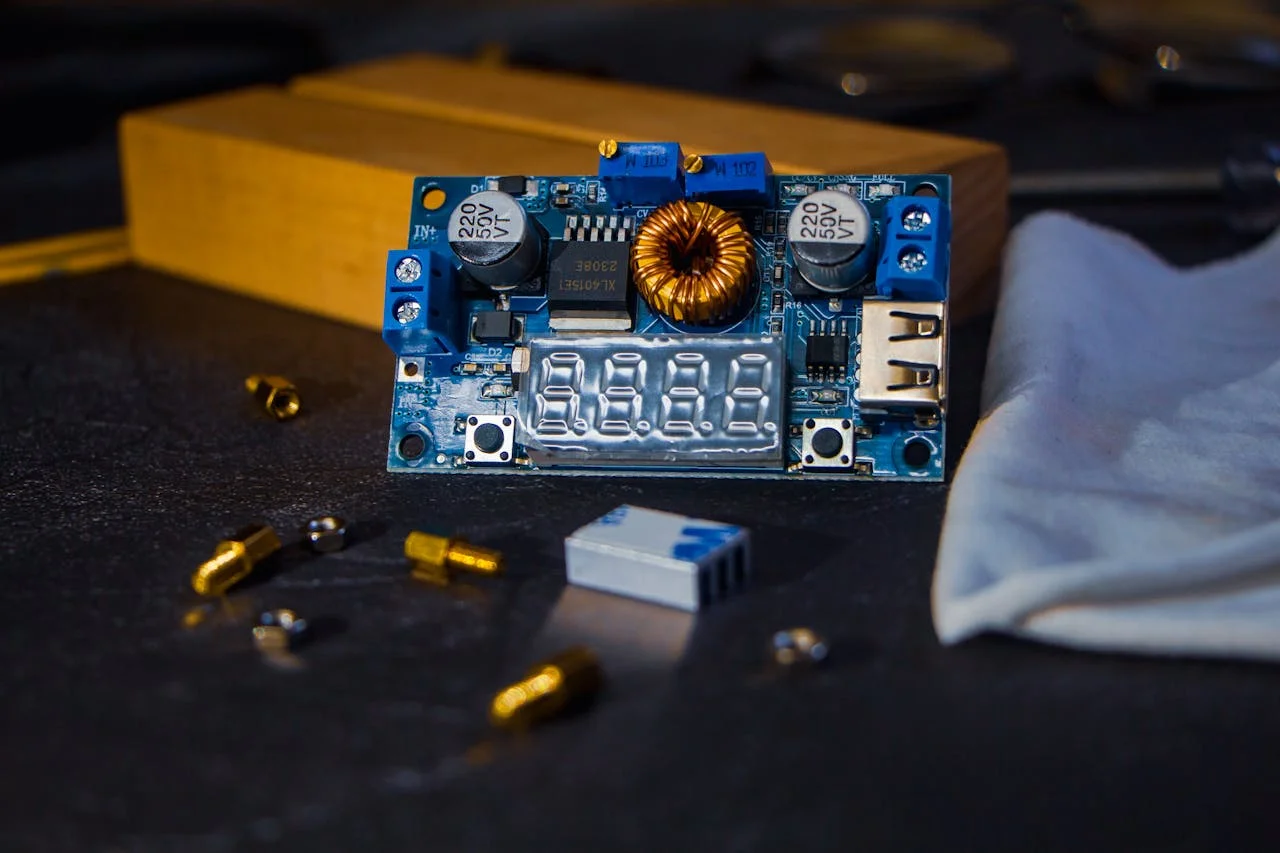

In practical circuit design, components such as the potentiometer and the current limiting resistor are essential tools for managing voltage levels, controlling current flow, and protecting sensitive devices. These passive components are widely used across analog, digital, and mixed-signal circuits, forming the foundation of safe and predictable electronic systems.
Potentiometers for Voltage and Signal Adjustment
A potentiometer is a variable resistor that allows engineers to adjust voltage or signal levels by changing the position of a movable wiper. It is commonly configured as a voltage divider, making it ideal for applications where adjustable output is required.
Typical uses include:
- Analog signal tuning and calibration
- Reference voltage adjustment
- User-controlled settings such as volume, speed, or brightness
- Fine trimming during testing and setup
Because potentiometers provide continuous adjustment, they are especially useful during prototyping and system calibration.
Current Limiting Resistors for Protection and Stability
A current limiting resistor is designed to restrict the amount of current flowing through a circuit branch. Its main purpose is protection — preventing overcurrent conditions that could damage components or cause unstable operation.
They are commonly used in:
- LED circuits to prevent excessive forward current
- Microcontroller I/O protection
- Input signal conditioning
- Power-up and fault-tolerant designs
By setting an upper current boundary, these resistors help ensure long-term reliability and consistent electrical behavior.
Combining Voltage Control and Current Protection
In many real-world designs, potentiometers and current limiting resistors are used together. A potentiometer may control an adjustable voltage or signal range, while a current limiting resistor ensures that downstream components remain protected even at extreme settings.
This combination allows engineers to:
- Safely tune operating parameters
- Prevent accidental overcurrent during adjustment
- Improve robustness during testing and user interaction
Such design patterns are common in power regulation, sensor interfaces, and analog control circuits.
Design Considerations in Practical Applications
When selecting potentiometers and current limiting resistors, engineers should consider:
- Resistance range and tolerance
- Power dissipation ratings
- Environmental stability and mechanical lifespan
- Impact on signal accuracy and noise
Attention to these factors improves both circuit performance and manufacturability, particularly when designs move from prototype to production.
From Design to Manufacturing
In production environments, consistent implementation of these basic components is critical. PCB and PCBA service providers such as PCBasic often emphasize design-for-manufacturing practices to ensure that adjustable and protective circuits behave reliably when assembled at scale, without requiring design changes.
Conclusion
Potentiometers and current limiting resistors play a key role in controlling voltage, regulating current, and protecting electronic circuits. By understanding how and when to apply these components, engineers can design systems that are both flexible and robust — capable of precise control while maintaining electrical safety across a wide range of applications.