


The jewelry industry has always been about stories—tales of rarity, romance, and timeless beauty. But today, a new narrative is emerging, one written not in the depths of the earth but in the precision of laboratories.
As consumers increasingly align their purchases with their values, the conversation around luxury is shifting from “how rare” to “how responsible.” This transformation isn’t just about swapping one stone for another. It represents a fundamental rethinking of what we consider valuable and why.
The modern consumer—particularly millennials and Gen Z—approaches luxury with a different lens, one that demands transparency, sustainability, and ethical integrity alongside beauty.
The Environmental Math That Changes Everything
Traditional diamond mining moves approximately 250 tons of earth to produce a single carat of diamond. The environmental footprint includes massive land disruption, water consumption, and energy expenditure. In regions where mining operations dominate, entire ecosystems can be permanently altered.
Lab-grown diamonds tell a different story. Created through two primary methods—High Pressure High Temperature (HPHT) and Chemical Vapor Deposition (CVD)—these stones replicate the natural diamond formation process in controlled environments.
The technology has advanced dramatically over the past decade, with modern facilities now capable of producing gem-quality diamonds that are chemically, physically, and optically identical to their mined counterparts.
The environmental benefits are measurable. Studies indicate that laboratory production can use significantly less water and generate considerably lower carbon emissions per carat, particularly when facilities utilize renewable energy sources. Some production facilities have begun integrating solar and wind power, further reducing their environmental impact.
But the equation extends beyond carbon and water. Lab-grown diamonds eliminate the landscape scarring associated with open-pit mining, preserve biodiversity in sensitive regions, and remove the complex ethical questions surrounding labor conditions in certain mining areas.
The Aesthetic Awakening
For decades, the jewelry industry marketed rarity as the primary indicator of value. Yet designers are discovering that creative freedom matters more than geological scarcity.
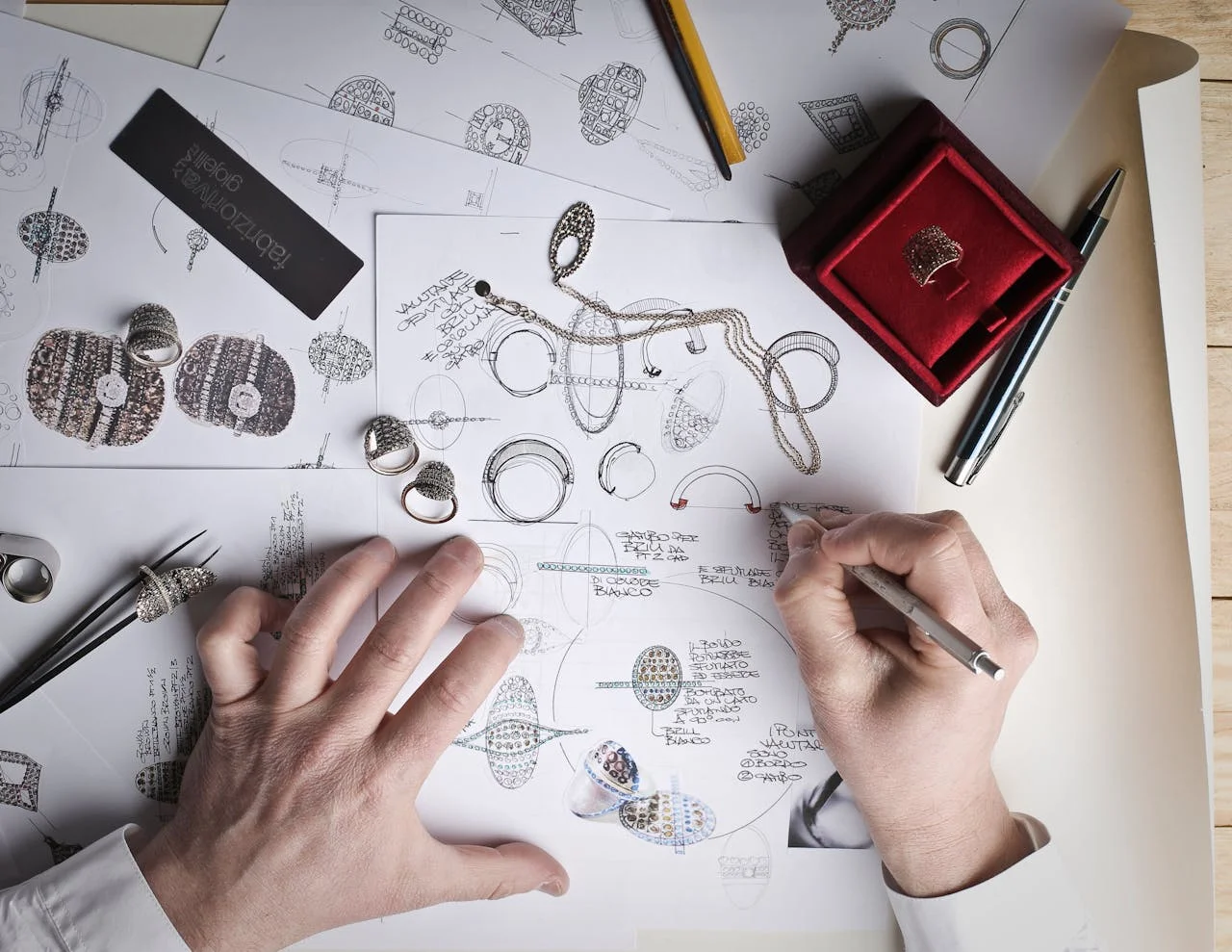
Modern designers increasingly incorporate lab-grown diamond jewelry into collections that prioritize innovative design over traditional status symbols, creating pieces that appeal to consumers who value both aesthetic excellence and environmental responsibility.
This shift has enabled new design possibilities. Without the premium costs associated with mined stones, designers can experiment with larger stones, unusual cuts, and more adventurous settings. Young jewelry houses are creating statement pieces that would have been economically unfeasible with traditional diamonds.
The result is a more democratized luxury market. Consumers can access higher-quality stones at various price points, making diamond jewelry accessible to broader demographics without compromising on beauty or craftsmanship. This accessibility aligns with a larger cultural shift away from exclusivity-based luxury toward value-based consumption.
The Technology Behind the Transformation
Understanding how lab-grown diamonds are created demystifies the process and highlights the innovation involved. The CVD method, which has become increasingly prevalent, involves placing a diamond seed in a sealed chamber filled with carbon-rich gas.
When heated to extreme temperatures, the gas molecules break apart, and carbon atoms attach to the seed, gradually building a diamond crystal layer by layer.
The HPHT method more closely mimics natural formation conditions, subjecting carbon to extreme pressure and temperature. Both methods require sophisticated equipment, precise environmental control, and extensive expertise. The technology continues to advance, with production times decreasing and quality consistency improving.
What makes these advances particularly significant is the transparency they enable. Unlike mined diamonds, which travel through complex supply chains, lab-grown diamonds can be traced from creation to consumer. This provenance certainty matters to consumers who want assurance about the origins of their purchases.
The Market Catches Up to Reality
Major jewelry retailers have begun embracing lab-grown diamonds, recognizing that consumer preferences are evolving. What was once a niche market has moved mainstream, with lab-grown stones now available at both independent boutiques and established jewelry houses.
The pricing structure reflects this maturation. While lab-grown diamonds initially entered the market at modest discounts to mined stones, the price differential has widened as production scales and efficiency improves.
This creates opportunities for consumers to either purchase larger or higher-quality stones at comparable budgets, or to allocate more resources toward custom settings and design work.
Industry professionals are adapting. Gemologists now routinely work with both natural and lab-grown stones. Jewelry designers incorporate them into collections. Even traditional luxury houses have begun exploring the category, recognizing that resistance to change risks alienating younger consumers.
Beyond the Binary Choice
The emergence of lab-grown diamonds doesn’t necessitate an either-or decision for the industry or consumers. Instead, it expands options and introduces new considerations into the purchase decision.
Some consumers will continue preferring natural diamonds for their geological rarity and romantic appeal. Others will choose lab-grown for environmental and ethical reasons. Many will make different choices for different pieces.
What matters most is informed choice. As the market matures, transparency improves. Retailers increasingly provide clear disclosure about stone origins. Certification organizations have developed protocols for identifying and grading lab-grown diamonds.
Consumers can make decisions aligned with their values, supported by accurate information.
This transparency extends to marketing language. The industry has moved away from confusing terminology toward clear, standardized descriptions. This linguistic clarity helps consumers understand exactly what they’re purchasing and why different options exist.
The Future Takes Shape
The trajectory seems clear: lab-grown diamonds will claim an increasingly significant market share, particularly among younger consumers whose purchasing decisions reflect broader lifestyle values. This doesn’t spell doom for traditional mining but rather indicates a diversifying market with room for multiple approaches.
Innovation continues on multiple fronts. Production methods become more efficient. Design possibilities expand. New applications emerge beyond jewelry—industrial uses, technological applications, even architectural elements.
The technology that enables lab-grown diamonds may ultimately transform multiple industries.
For consumers, this evolution offers something valuable: choice backed by information. The ability to select jewelry that reflects both aesthetic preferences and personal values represents a meaningful shift in how we approach luxury.
It suggests that the future of the jewelry industry lies not in defending old narratives but in creating new ones—stories of innovation, responsibility, and beauty that don’t require compromise.
A New Definition of Luxury
The quiet revolution in diamond production isn’t just about where stones come from. It’s about what luxury means in an era when consumers demand more from the products they buy and the companies they support.
Lab-grown diamonds represent one answer to that demand—an answer written in precision, transparency, and conscious choice.
As we move forward, the question is no longer whether technology can replicate nature’s masterwork—it already has. The real question is how we choose to define value in our lives.
Today’s jewelry buyers are discovering that true luxury doesn’t require compromise. Style, quality, and responsibility can coexist in pieces that tell a story worth wearing. The choice, as always, is personal—but now it’s informed, intentional, and aligned with a vision of beauty that extends beyond the stones themselves.