

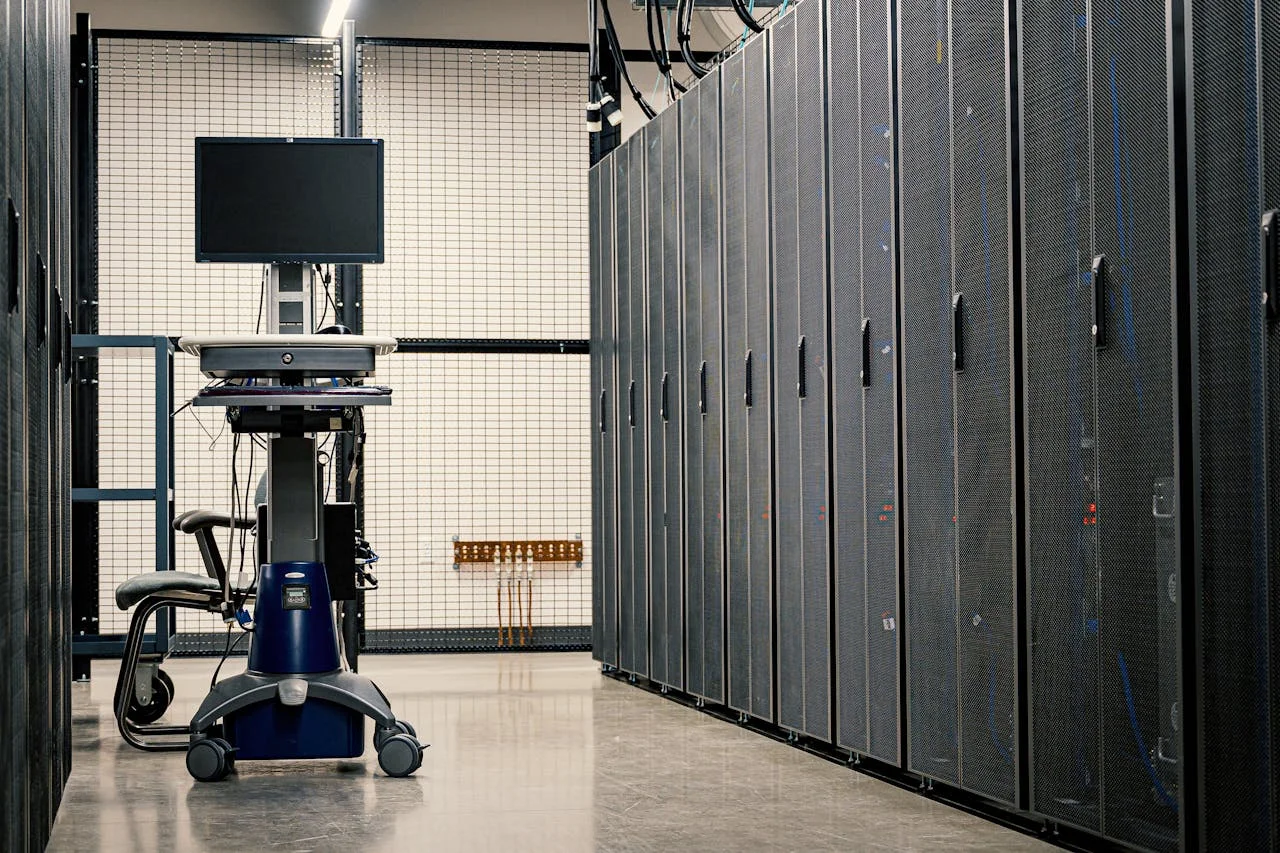

Most people don’t think about where their Netflix stream actually comes from. They click play, and it works. But somewhere between that click and your screen, a massive facility full of humming servers is doing the heavy lifting.
Datacenters are basically the internet’s engine room. They’ve been growing at about 12% per year since 2017, and honestly, that number probably undersells how much has changed. The AI boom alone has thrown previous growth projections out the window.
What These Facilities Actually Do
Think of a datacenter as a giant, climate-controlled warehouse for computers. Rows upon rows of servers process everything from your email to complex financial transactions. When a company says their app runs “in the cloud,” they really mean it runs on someone else’s servers in one of these buildings.
The speed at which these places operate is genuinely impressive. You request a webpage from a server 3,000 miles away, and it loads in under a second. That doesn’t happen by accident.
Companies sourcing monthly datacenter proxies tap into this same infrastructure. The performance advantage comes down to fiber connections, smart routing, and raw processing power that regular internet connections just can’t match.
How They Keep Everything Running
Virtualization changed the game for datacenter efficiency. Instead of dedicating one physical server to one task, operators now run dozens of virtual machines on single hardware units. It sounds technical, but the practical effect is pretty straightforward: way more output from the same equipment.
The International Energy Agency puts global datacenter electricity consumption at around 415 terawatt hours for 2024. That’s roughly 1.5% of worldwide electricity use, which sounds small until you realize it’s comparable to entire countries.
Cooling is a constant headache for operators. Pack enough servers together and you’ve got a serious heat problem. Some facilities blast cold air, others circulate chilled water, and Microsoft even tried sinking servers in the ocean. Whatever works, really.
Everything gets built with backup systems in mind. Generators kick in when power fails. Data copies itself across multiple locations. The goal is keeping things online even when stuff breaks, because stuff always breaks eventually.
Following the Money
The spending numbers have gotten a bit ridiculous lately. Gartner research shows datacenter systems spending jumped nearly 35% in 2024 alone. Server sales are on track to triple between 2023 and 2028.
AI is the obvious culprit here. Training large language models eats up GPU clusters like nothing else. Older datacenters weren’t designed for this kind of concentrated power draw, so companies are building entirely new facilities just to handle AI workloads.
The US leads in sheer numbers with over 5,300 facilities as of early 2024. China comes next, followed by European hotspots like Germany and the Netherlands. Ireland has become surprisingly important too, partly because of favorable tax treatment and cool weather (less cooling costs).
Why Location Still Matters
According to Wikipedia’s overview of datacenter infrastructure, these facilities handle everything from streaming video to machine learning workloads. That variety creates complicated traffic patterns that operators spend considerable effort optimizing.
Physical distance still creates latency. Someone in Singapore accessing a Virginia-based server will notice more delay than someone in New York. It’s just physics. Major providers spread their datacenters across continents specifically to shrink those gaps.
Content delivery networks cache popular stuff closer to users, which helps. But the core processing still happens in primary datacenters, and that’s where the real computational muscle lives.
What Comes Next
The IEA thinks datacenter power consumption could hit 945 terawatt hours by 2030. For perspective, that’s about what Japan uses annually for everything.
Power sourcing is becoming a genuine concern. Some operators are locking in renewable energy contracts years in advance. Others are looking at small nuclear reactors dedicated to individual facilities. Natural gas fills the gaps where renewables fall short.
Edge computing is picking up steam too. Rather than routing everything through massive central facilities, smaller datacenters positioned closer to users can handle time-sensitive tasks. Self-driving cars and AR applications need that kind of low-latency response.
The industry has come a long way from server closets in office buildings. These facilities now shape infrastructure planning, energy policy, and where tech companies choose to expand. That influence is only going to grow as digital services become more embedded in daily life.